

L-LIVE Regional Tool for Livestock Emergency
Last July 13-15, 2022, twenty-eight (28) participants from various government agencies, local government unit officials, provincial and municipal veterinarians, representatives from non-government organizations, and the academe, attended the workshop for livestock emergency preparedness to alleviate the effects of volcanic eruption on livestock and farmers.
The 3-day workshop conducted by the Food and Agriculture Organization Philippines (FAO PH) in Quest Hotel, Tagaytay City was attended by three (3) PHIVOLCS researchers: Dr. Raymond Patrick R. Maximo, Ms. Ynna Patricia M. Aquino, and Mr. Paolo Reniva, representing the Taal Volcano Observatory in Talisay, Batangas. Assistant Secretary Reildrin Morales of the Department of Agriculture delivered the opening message to the participants. Shiela Wertz-Kanounnikoff, the ad interim representative of FAO gave her welcome remarks telling the participant to grab this opportunity to learn from the experts in animal emergencies.

The project “Livestock Emergency Preparedness for Areas at High Risk of Volcanic Eruption” started in 2019 with the primary goal of creating a regional tool that can be used by planners, disaster officers, donors, and government officials in preparing for an emergency related to volcanic events. The two-year project included case studies on volcanoes in three countries, the Philippines, Indonesia, and Vanuatu. The aim was to show how people living close to volcanoes manage their livestock and livelihood in times of volcanic crisis.
In the Philippines, Mayon Volcano in Albay and Taal Volcano in Batangas were the case studies of the project. PHIVOLCS contributed to the project through the use of GeomapperPH platform in creating a database that not only included the location of farms, and pooling areas but also the different types of livestock (i.e., cattle, chicken, swine, etc) and safe areas for evacuation. Technical knowledge of PHIVOLCS’ volcanologist greatly improved the chapter of the tool that discussed the different types of eruption and the explosivity of the eruption.

The workshop provided opportunities for other agencies involved in the project to give their feedback on the regional tool called Livelihood and Livestock Impacted by Volcanic Events or L-LIVE. The participants were also taught how to use the regional tool to create a proper response at the onset of the event. A tabletop simulation of a fictitious volcanic eruption was used by the participants to come up with a response that would help the farmers after the occurrence of said event. It was unfortunate that a real evacuation exercise was impossible at this time because of the Covid-19 pandemic.
The participants were also given the chance to listen to the experiences of the farmers affected by the Taal Volcano eruption in January 2020. Some of the key responders shared their lessons learned during the disaster. The farmers said that water was of primary importance, without water it would be difficult for the livestock to eat because thick ash covered the vegetation. Other farmers shared that financial support was not enough to help them after the event had occurred. While one farmer lamented on the consequences of the lockdowns that prevented her from caring her livestock and killed most of her swine due to the spread of African Swine Fever (ASF).
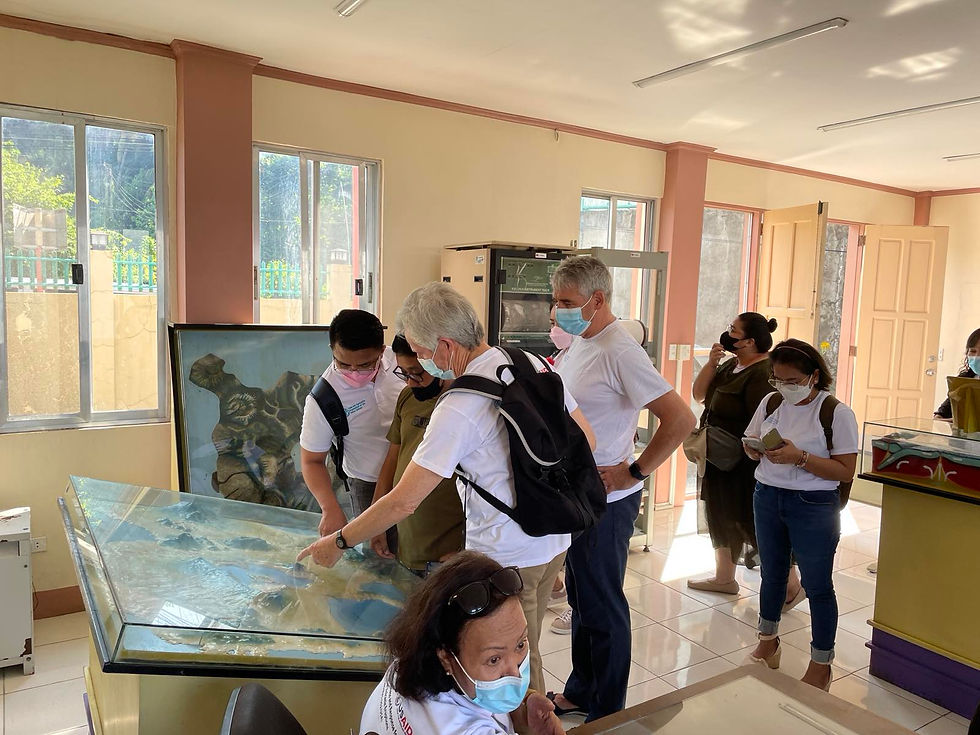
At the closing of the program, the technical experts from FAO Regional Office of Asia and the Pacific (FAORAP) expressed their gratitude to the participants who actively participated in the workshop activities. Undersecretary Renato Solidum, Jr. of the Department of Science and Technology delivered the closing remarks via a recorded message. In his message, he said that he understood the farmers why they cannot leave behind their livestock and that is why this tool is important so that measures to save not only the lives of the farmers but their livestock would be emplaced.
The project will officially close in August of this year. A possible second-phase proposal is already being discussed and will be submitted during the next project cycle. The FAO PH’s partner for this project is the Department of Agriculture – Bureau of Animal Industry and this project is supported by the United States Agency for International Development’s Bureau of Humanitarian Assistance (USAID’s BHA).


Comments